EU Market Surveillance Regulation Compliance Hub
Regulation (EU) 2019/1020 is the directly applicable EU framework for market surveillance and enforcement of harmonised product rules. Its Network provisions have applied since 1 January 2021 and most other provisions since 16 July 2021. The Regulation works alongside the product-specific Union legislation that sets the underlying conformity requirements.
Review this hub before EU launch, importer onboarding, fulfilment setup, customs release, or incident response, and reopen the record when the product, applicable law, seller, importer, operator, fulfilment route, EU targeting, test evidence, or risk information changes.
Start with the exact product, intended use, version, route to market, and every applicable sector law. MSR scope and scope are different tests: Article 2 covers the in Annex I, while Article 4 applies only to the laws listed in Article 4(5) or laws that expressly make Article 4 applicable. Then identify supply-chain roles, document EU-targeted , and prepare evidence for authority or customs controls. Commission notices and the Blue Guide explain implementation but do not replace the binding Regulation or sector law.
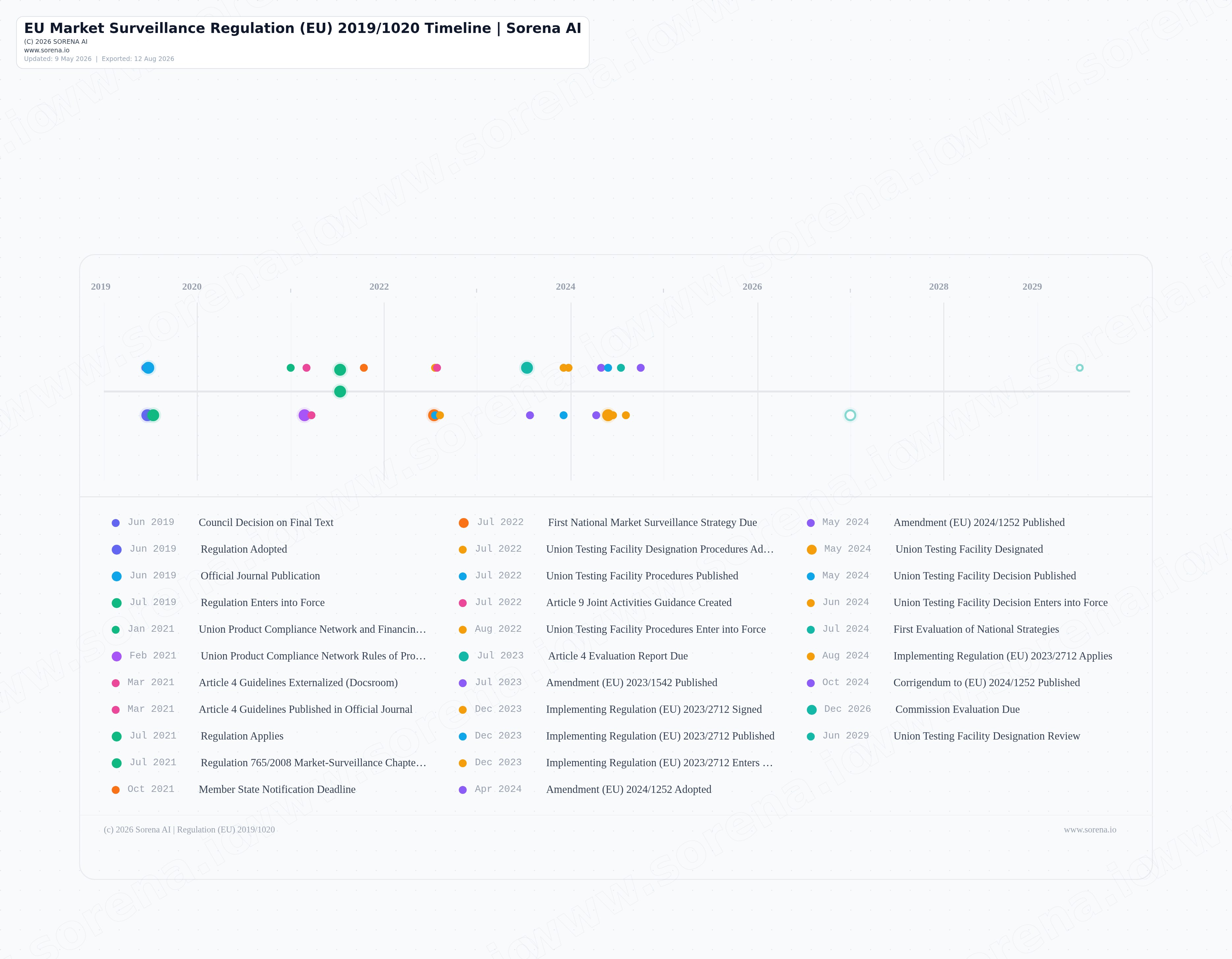
Key dates for market surveillance planning
The EU Product Compliance Network provisions have applied since 1 January 2021; most MSR provisions, including Articles 4 and 6, have applied since 16 July 2021. Use later dates only where the relevant amendment or sector law supports them. The hub focuses on , , authority requests, customs controls, corrective actions, , and Safety Gate.
Choose the next market-surveillance decision
New to the Regulation? Start with product scope and the route to the EU market. If those facts are already documented, jump to the operator, evidence, authority-response, customs, online-sales, or comparison guide you need.
Start here: product scope and market access
Decide whether the product and sector law are in MSR scope, what changed in the enforcement framework, whether Article 4 applies, and whether a distance-sales offer targets EU end users.
Operator roles, requirements, and evidence
Assign the eligible EU-established operator, set up Article 4 tasks, and connect declarations, technical documentation, labels, and authority-ready evidence to each product and route to market.
Investigations, corrective action, and enforcement
Triage authority requests, preserve the investigation record, select proportionate corrective action, and distinguish EU-level authority powers from penalties established under national law.
Customs, cooperation systems, and dates
Prepare for controls before release for free circulation, understand the four-working-day suspension path, and separate business-triggered response work from institutional milestones and EU cooperation tools.
Online sales and marketplace workflows
Document EU targeting, connect listings to the correct product and operator evidence, and keep MSR product-law duties distinct from separate GPSR or DSA platform obligations.
Sector interfaces, comparisons, and questions
See what the MSR adds to sector conformity rules, keep binding law separate from the Blue Guide and Decision 768/2008, and route GPSR, DSA, or focused FAQ questions without merging legal regimes.
Turn EU Market Surveillance Regulation duties into owned product-compliance work
This hub helps route MSR work by product family, applicable legislation, sales channel, operator role, import path, and authority interaction. Assessment Autopilot can convert the guidance into owners, evidence requests, and review checkpoints; Research Copilot can support cited , distance-sales, customs, or enforcement questions.
- Start with the product, applicable Union harmonisation law, sales channel, importer or fulfilment setup, and whether requires an EU-established economic operator.
- Use Assessment Autopilot to request declarations, technical-documentation indexes, operator mandates, contact-detail checks, customs-hold records, and corrective-action evidence.
- Use Research Copilot for cited questions about tasks, Article 6 distance-sales targeting, authority documentation requests, customs suspensions, records, and Safety Gate alerts.
- Keep product files, authority correspondence, border-control decisions, test evidence, risk assessments, and recall or withdrawal records connected to the same MSR work item.