China E-Waste Law Compliance Guide
Decide whether China waste electrical and electronic product recovery or disposal rules apply, verify qualified downstream , and keep recycler, disposal, and lifecycle records.
Use the decision path below before selecting a collection route or operator. The regulation and licensing measures have applied since 1 January 2011. The treatment fund stopped being collected on 1 January 2024, but the catalogue, actor, qualified-treatment, monitoring, reporting, and recordkeeping rules remain. HJ 527-2026 has governed treatment pollution control since 1 March 2026. The operator's own routine monitoring is separate from the authority's supervisory monitoring, which the licensing measures require at least once every six months.
The State Council's Regulation on Recovery and Disposal of Waste Electrical and Electronic Products applies to recovery, , and related activities for discarded products listed in the . The current published catalogue is the 2014 edition, effective since 1 March 2016. It lists 14 categories, with boundaries such as refrigerator volume <=800 litres, room-air-conditioner cooling output <=14,000 W, washing capacity <=10 kg, and printer or copier format smaller than A2 at <=80 pages per minute. Treatment includes dismantling, material or fuel extraction, hazard-reduction processes, and compliant final landfill placement; repair, refurbishment, and resale after repair or refurbishment are excluded. City-level ecology and environment authorities issue treatment qualifications, while commerce authorities manage recovery and other departments retain their assigned responsibilities.
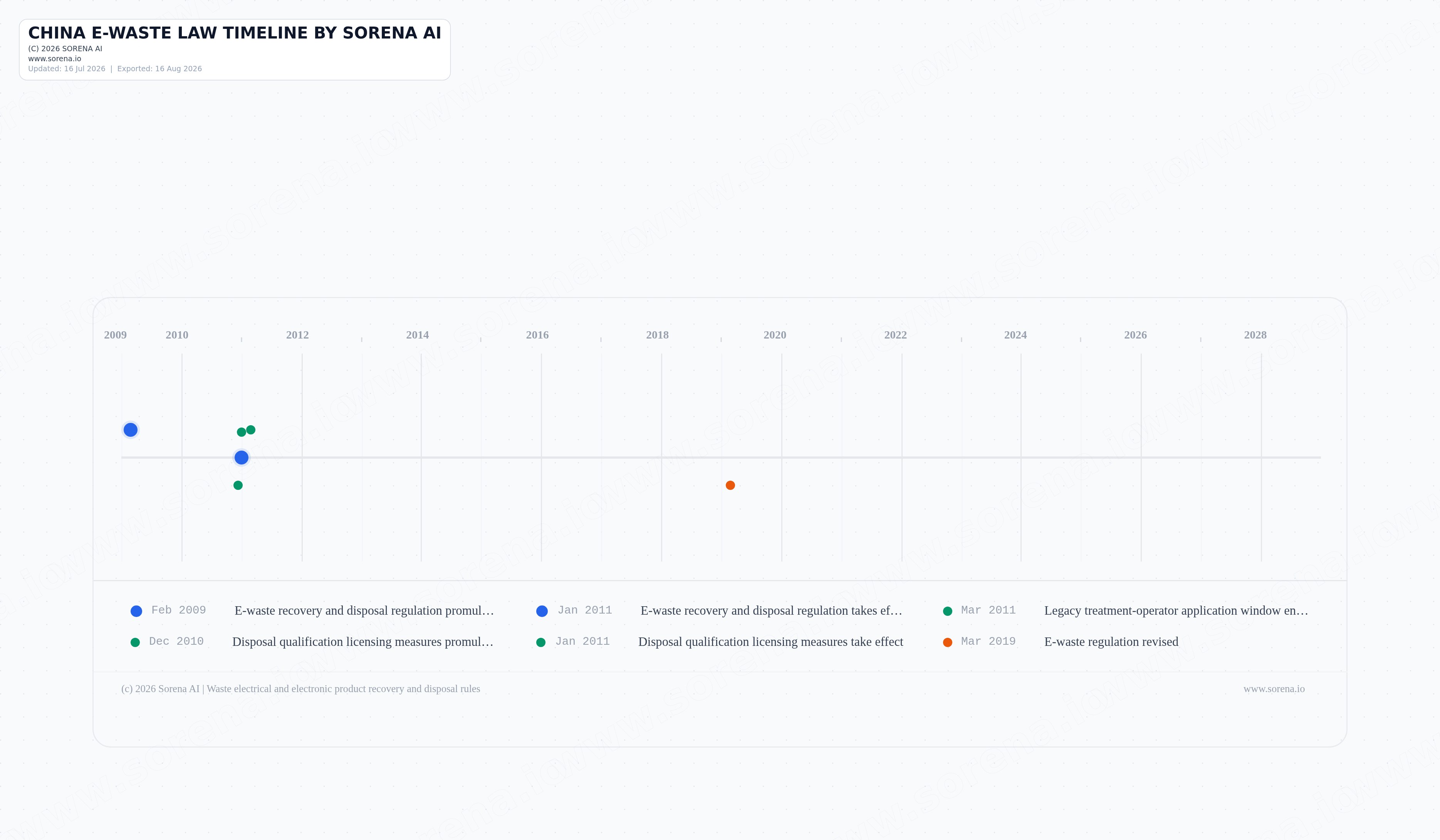
Key dates for China E-Waste Law
Distinguish the regulation's 1 January 2011 commencement, its 2 March 2019 revision, the catalogue's 1 March 2016 effective date, the 1 January 2024 stop to -fund collection, and the 1 March 2026 effective date of HJ 527-2026 from recurring duties. Permit applications include a notice within three working days after acceptance, at least ten working days for public comment, and a decision within 60 days after acceptance. Regional treatment development plans are revised every five years; a plan revision triggers review and certificate replacement for operators that intend to continue. Certificate changes and closure have separate triggers.
Move from catalogue scope to controlled treatment
First match the discarded product to the catalogue and classify the activity. Then identify each actor, route covered to a qualified enterprise, and keep the evidence required for that role.
Start here: scope and roles
Confirm catalogue coverage, distinguish treatment from repair or refurbishment, and allocate producer, import consignee or agent, seller, collector, and treatment-enterprise responsibilities. Producer and importer fund payments are historical for periods before 1 January 2024.
Qualification and evidence
Determine whether a treatment qualification is required, verify its permitted categories and facilities, and contract for traceable handoff and treatment records. Route a changed legal-person name, legal representative, or registered address to amendment within 15 working days; added categories, new or altered facilities, and operation more than 20% above certified capacity require reapplication.
Dates, monitoring, and enforcement
Separate historical dates from recurring controls. Unqualified treatment can lead to shutdown or closure, confiscation of illegal proceeds, and a CNY 50,000-500,000 fine; data-system, reporting, retention, or routine-monitoring failures can lead to correction orders and fines up to CNY 50,000.
Focused questions
Use direct answers for permit, recordkeeping, and China RoHS boundary questions.
Prepare the qualified disposal evidence file
Map China's catalogue test, actor roles, qualification check, handoff trail, and -enterprise records to their sources and owners.
- Start with the official -catalogue trigger, the discarded product, the physical activity, and the China entity or contractor performing each lifecycle role.
- Keep each catalogue, role, certificate, and disposal-route decision with its official source, owner, and evidence.
- Preserve the product facts, certificate copy, shipment trail, records, and review history when a product, operator, facility, category, or capacity changes.